Japan repays the attentive traveller unlike almost anywhere else on earth. But getting the timing right changes everything. Cherry blossom season is genuinely transformative — and genuinely brief. Autumn foliage in Kyoto is arguably even more beautiful, and far less crowded. The ski season in Hokkaido rivals the Alps. The summer festivals are extraordinary.
Each season offers a fundamentally different Japan. Here is how to choose the right one for you.
Spring — Cherry Blossom (Late March to Mid-April)
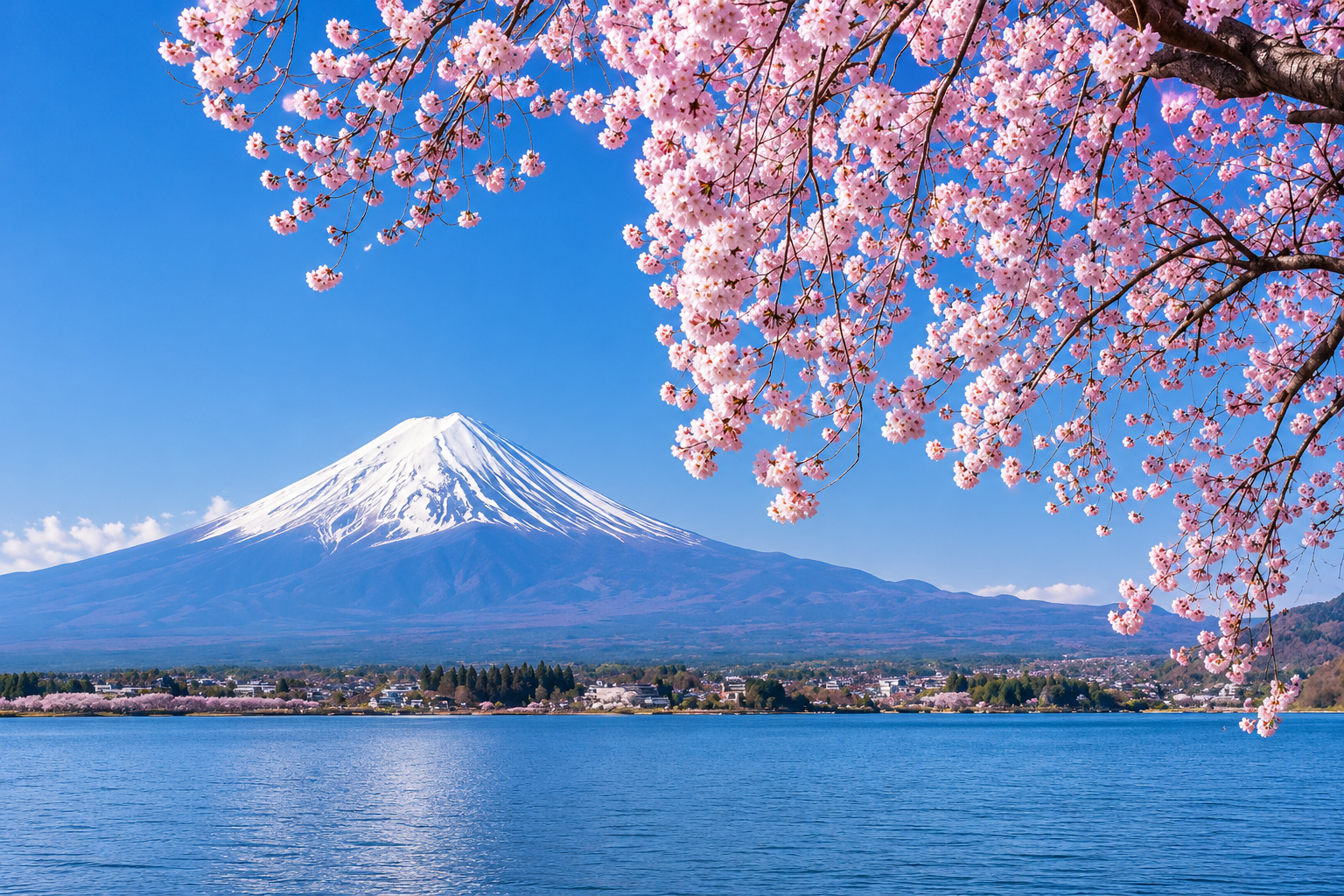
Cherry blossom season (sakura) is the single most popular time to visit Japan, and for good reason. The blossoms are ephemeral — peak bloom lasts approximately 7–10 days in any given city — and the entire country organises itself around their arrival. Parks fill with hanami (blossom-viewing) gatherings. Temples and shrines become ethereal. The light is soft and warm.
The key challenge is timing. The blossom front moves from south to north — Kyushu in late March, Kyoto and Tokyo in early April, Tohoku and Hokkaido in late April. If you want to guarantee blossom, build your itinerary to move with the front, or plan your trip around Kyoto in the first week of April, which is historically the most reliable window.
Best for: First-time visitors who want the iconic Japan experience. Romance. Photography. Cultural immersion.
The honest caveat: Cherry blossom season is extremely popular. Hotels in Kyoto book 6–9 months ahead for peak bloom week. Prices are at their highest. Temples and parks are crowded. If crowds bother you, consider autumn instead.
“Cherry blossom is everything they say it is. Autumn in Kyoto is everything they forget to mention. Both are extraordinary. Autumn is quieter.” — Max, Asia & Middle East Specialist
Autumn — Koyo Foliage (Mid-November to Early December)
Autumn foliage in Japan (koyo) is, in my personal opinion, the most beautiful season to visit. The maples turn from green to gold to deep crimson across three weeks, and the effect against the dark wood and stone of Kyoto’s temples is staggering. Tofuku-ji, Eikando and Kiyomizu-dera are among the finest autumn landscapes in the world.
The foliage front moves from north to south — the opposite of cherry blossom. Hokkaido peaks in mid-October, Tokyo in late November, Kyoto in late November to early December. For Kyoto specifically, the third and fourth weeks of November are the sweet spot.
Autumn is less crowded than cherry blossom season. Prices are lower. Availability is better. The weather is cool, clear and ideal for walking. If you are choosing between spring and autumn, autumn gives you 80% of the beauty at 60% of the cost and half the crowds.
Best for: Repeat visitors. Travellers who prefer fewer crowds. Photography. Temple visits. Hiking. Onsen (hot spring) season begins.
Summer — Festivals and Mountains (June to August)
Japanese summers are hot and humid — Tokyo in August regularly exceeds 35°C with high humidity. This deters many visitors, which means the cultural sites are quieter than spring or autumn. It also means the summer festivals (matsuri) are largely experienced without the international tourist crowd.
The festivals are worth the heat. Gion Matsuri in Kyoto (July) is one of the most visually spectacular festivals in Asia. Tenjin Matsuri in Osaka (July) is nearly as impressive. Obon (mid-August) brings lantern ceremonies, Bon Odori dancing and a deep cultural atmosphere across the country.
For travellers who want to escape the heat: the Japanese Alps (Kamikochi, Takayama) are cool and spectacular in summer. Hokkaido is pleasant — lavender fields in Furano peak in July, and the hiking is world-class.
Best for: Festival enthusiasts. Mountain hiking. Hokkaido exploration. Budget-conscious luxury travellers (summer is lower season except during Obon).
Winter — Snow, Ski and Onsen (December to February)
Hokkaido receives some of the most consistent powder snow in the world. Niseko is the most famous ski resort, but Furano, Rusutsu and Kiroro offer equally excellent conditions with fewer international visitors. The snow quality — dry, light, reliably deep — rivals the best in the Alps or the Rockies.
Beyond skiing, winter Japan has its own magic. Snow monkeys bathing in hot springs in Nagano (Jigokudani). Illuminated temples in Kyoto. Sapporo Snow Festival (early February) — one of the world’s largest winter festivals, with ice sculptures the size of buildings.
The onsen experience is at its finest in winter. Soaking in an outdoor hot spring (rotenburo) while snow falls around you is one of the most quintessentially Japanese experiences available to a visitor.
Best for: Skiers. Onsen lovers. Snow monkey enthusiasts. Travellers who want a Japan that most visitors never see.
The Shoulder Seasons — May and October
May and October are arguably the smartest months to visit Japan. The weather is near-perfect — warm but not hot, clear skies, comfortable humidity. The crowds are thin. The prices are moderate. The landscape is green (May) or beginning to turn (October).
May is Golden Week (late April to early May) — a cluster of national holidays when domestic tourism surges. Avoid the first week of May specifically. The rest of the month is excellent.
October is pre-foliage in Kyoto and Tokyo but post-foliage in Hokkaido. The weather is crisp and perfect for walking. This is my personal top recommendation for travellers who want the best weather, fewest crowds, and lowest prices without sacrificing the quality of the experience.
Which Region, Which Season?
The Verdict
Japan is a year-round destination. Every season delivers something genuinely extraordinary. Cherry blossom is iconic and worth the crowds. Autumn is quieter and arguably more beautiful. Winter offers skiing and onsen at their finest. Summer has the festivals.
If you have never been and can travel any time: go in late November for autumn foliage. If you want cherry blossom, book 9 months ahead and accept the crowds. If you want the smartest overall value: go in October.