The HighStreet Holidays Journal
Travel, Deeply Considered
Expert guides, destination deep-dives, First Class cabin reviews and insider knowledge from the specialists who have actually been there.
Explore by Destination
Filtered Articles: When to Visit · Maldives · Best Time To Visit
 When to Visit
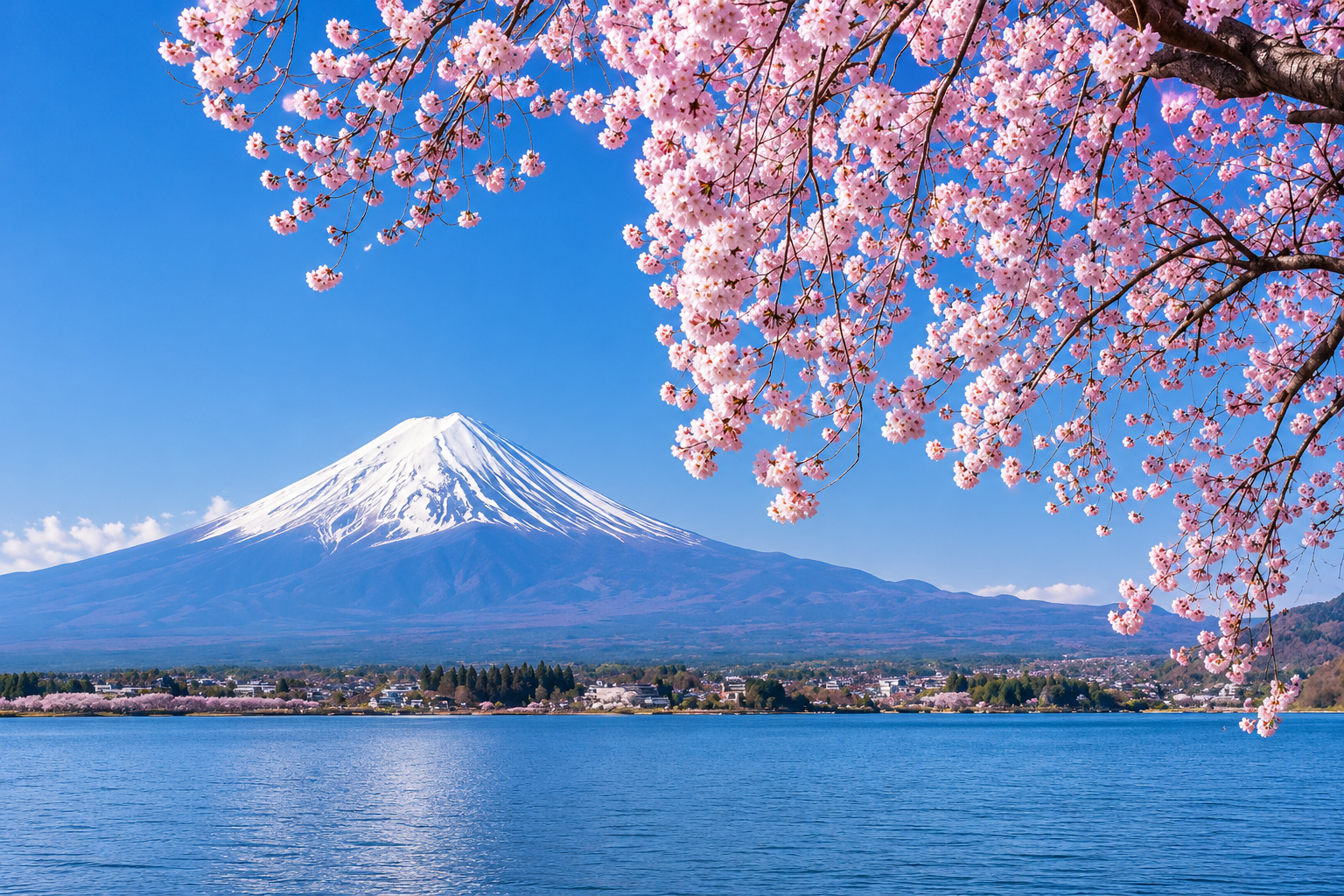
Best Time to Visit Japan — Cherry Blossom, Autumn & Beyond
Japan repays the attentive traveller unlike almost anywhere else on earth. But getting the timing right changes everything. Cherry blossom season is genuinely transformative — and genuinely brief. Autumn foliage in Kyoto is arguably even more beautiful, and far less crowded. The ski season in Hokkaido rivals the Alps. The summer festivals are extraordinary. Each season offers a fundamentally different Japan. Here is how to choose the right one for you. Spring — Cherry Blossom (Late March to Mid-April) Cherry blossom season (sakura) is the single most popular time to visit Japan, and for good reason. The blossoms are ephemeral — peak bloom lasts approximately 7–10 days in any given city — and the entire country organises itself around their arrival. Parks fill with hanami (blossom-viewing) gatherings. Temples and shrines become ethereal. The light is soft and warm. The key challenge is timing. The blossom front moves from south to north — Kyushu in late March, Kyoto and Tokyo in early April, Tohoku and Hokkaido in late April. If you want to guarantee blossom, build your itinerary to move with the front, or plan your trip around Kyoto in the first week of April, which is historically the most reliable window. Best for: First-time visitors who want the iconic Japan experience. Romance. Photography. Cultural immersion. The honest caveat: Cherry blossom season is extremely popular. Hotels in Kyoto book 6–9 months ahead for peak bloom week. Prices are at their highest. Temples and parks are crowded. If crowds bother you, consider autumn instead. “Cherry blossom is everything they say it is. Autumn in Kyoto is everything they forget to mention. Both are extraordinary. Autumn is quieter.” — Max, Asia & Middle East Specialist Autumn — Koyo Foliage (Mid-November to Early December) Autumn foliage in Japan (koyo) is, in my personal opinion, the most beautiful season to visit. The maples turn from green to gold to deep crimson across three weeks, and the effect against the dark wood and stone of Kyoto’s temples is staggering. Tofuku-ji, Eikando and Kiyomizu-dera are among the finest autumn landscapes in the world. The foliage front moves from north to south — the opposite of cherry blossom. Hokkaido peaks in mid-October, Tokyo in late November, Kyoto in late November to early December. For Kyoto specifically, the third and fourth weeks of November are the sweet spot. Autumn is less crowded than cherry blossom season. Prices are lower. Availability is better. The weather is cool, clear and ideal for walking. If you are choosing between spring and autumn, autumn gives you 80% of the beauty at 60% of the cost and half the crowds. Best for: Repeat visitors. Travellers who prefer fewer crowds. Photography. Temple visits. Hiking. Onsen (hot spring) season begins. Summer — Festivals and Mountains (June to August) Japanese summers are hot and humid — Tokyo in August regularly exceeds 35°C with high humidity. This deters many visitors, which means the cultural sites are quieter than spring or autumn. It also means the summer festivals (matsuri) are largely experienced without the international tourist crowd. The festivals are worth the heat. Gion Matsuri in Kyoto (July) is one of the most visually spectacular festivals in Asia. Tenjin Matsuri in Osaka (July) is nearly as impressive. Obon (mid-August) brings lantern ceremonies, Bon Odori dancing and a deep cultural atmosphere across the country. For travellers who want to escape the heat: the Japanese Alps (Kamikochi, Takayama) are cool and spectacular in summer. Hokkaido is pleasant — lavender fields in Furano peak in July, and the hiking is world-class. Best for: Festival enthusiasts. Mountain hiking. Hokkaido exploration. Budget-conscious luxury travellers (summer is lower season except during Obon). Winter — Snow, Ski and Onsen (December to February) Hokkaido receives some of the most consistent powder snow in the world. Niseko is the most famous ski resort, but Furano, Rusutsu and Kiroro offer equally excellent conditions with fewer international visitors. The snow quality — dry, light, reliably deep — rivals the best in the Alps or the Rockies. Beyond skiing, winter Japan has its own magic. Snow monkeys bathing in hot springs in Nagano (Jigokudani). Illuminated temples in Kyoto. Sapporo Snow Festival (early February) — one of the world’s largest winter festivals, with ice sculptures the size of buildings. The onsen experience is at its finest in winter. Soaking in an outdoor hot spring (rotenburo) while snow falls around you is one of the most quintessentially Japanese experiences available to a visitor. Best for: Skiers. Onsen lovers. Snow monkey enthusiasts. Travellers who want a Japan that most visitors never see. The Shoulder Seasons — May and October May and October are arguably the smartest months to visit Japan. The weather is near-perfect — warm but not hot, clear skies, comfortable humidity. The crowds are thin. The prices are moderate. The landscape is green (May) or beginning to turn (October). May is Golden Week (late April to early May) — a cluster of national holidays when domestic tourism surges. Avoid the first week of May specifically. The rest of the month is excellent. October is pre-foliage in Kyoto and Tokyo but post-foliage in Hokkaido. The weather is crisp and perfect for walking. This is my personal top recommendation for travellers who want the best weather, fewest crowds, and lowest prices without sacrificing the quality of the experience. Which Region, Which Season? The Verdict Japan is a year-round destination. Every season delivers something genuinely extraordinary. Cherry blossom is iconic and worth the crowds. Autumn is quieter and arguably more beautiful. Winter offers skiing and onsen at their finest. Summer has the festivals. If you have never been and can travel any time: go in late November for autumn foliage. If you want cherry blossom, book 9 months ahead and accept the crowds. If you want the smartest overall value: go in October.
 When to Visit
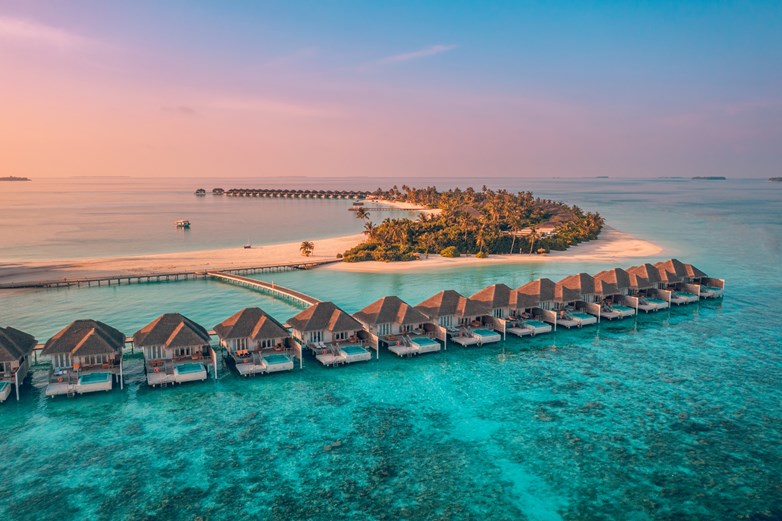
Best Time to Visit the Maldives — A Month-by-Month Guide
The honest answer to “when should I go to the Maldives?” is: it depends entirely on what you want from your trip. November to April is the dry season and the easy recommendation. But “dry season” is a broad brush that obscures the real differences between months — differences in price, in crowds, in marine life, and in which atoll will give you the best experience. I have visited the Maldives in every month of the year across 15 years of arranging holidays there. Here is what I actually tell my clients. The Two Seasons — Dry vs Wet The Maldives has two monsoon seasons. The northeast monsoon (iruvai) runs from November to April and brings dry weather, calm seas and excellent visibility. The southwest monsoon (hulhangu) runs from May to October and brings more rain, stronger winds and rougher seas — but also lower prices, fewer tourists and some of the best marine life encounters of the year. Temperatures barely change. The Maldives sits close to the equator, and air temperatures hover between 28°C and 31°C year-round. Water temperature ranges from 27°C to 30°C. You will never be cold in the Maldives, regardless of when you visit. The real variable is rainfall — and even in the wet season, rain in the Maldives typically arrives in short, intense bursts rather than all-day downpours. A “rainy day” in the Maldives often means an hour of dramatic tropical rain followed by blue skies and sunshine. “I have been to the Maldives in August and had seven days of unbroken sunshine. I have been in February and had two days of rain. The seasons are averages, not guarantees.” — Almas, Travel Specialist January & February — Peak Season This is the most popular time to visit. The weather is at its driest and most reliable. Skies are consistently blue, seas are calm, and underwater visibility is at its best — typically 30 metres or more. If you are visiting for the first time and want a guaranteed-good-weather experience, January and February are the safest choices. The trade-off is price and availability. January and February are peak season across every resort in the Maldives. Prices are at their highest, and the most popular villas — particularly overwater suites at Soneva Fushi, One&Only Reethi Rah and Four Seasons Landaa Giraavaru — book out months in advance. If you want to travel in these months, we typically recommend booking 6–9 months ahead. Best for: First-time visitors, honeymooners who want certainty, anyone who prioritises guaranteed sunshine over everything else. Diving & snorkelling: Excellent visibility on the east side of atolls. Manta rays can be spotted at cleaning stations in the central atolls. Whale shark sightings are less frequent than in the wet season. March & April — The Sweet Spot March and April are, in my experience, the best overall months to visit the Maldives — and the months I most often recommend to clients who are flexible on dates. The weather is still reliably dry, though clouds begin to build towards the end of April. Visibility remains excellent. The crucial difference is price: March rates are typically 15–20% lower than January peak, and April can be 25–30% lower. Availability is also significantly better — you can book 3–4 months ahead rather than 9. The water is at its warmest in March and April, which makes for the most comfortable snorkelling of the year. The seas remain calm. The resorts are noticeably quieter than in January. Best for: Experienced travellers who want peak-season weather without peak-season crowds or prices. Couples. Divers. Anyone who values seclusion. Our recommendation: If your dates are flexible and you want the single best value-to-weather ratio in the Maldives, book the second or third week of March. May to July — The Wet Season Begins May marks the transition into the southwest monsoon. Rain increases, winds pick up, and the western sides of atolls begin to receive more weather. Visibility drops on some reefs. This is when many travellers assume the Maldives is “closed” or not worth visiting. They are wrong. May to July is when the Maldives becomes genuinely interesting for marine life. The change in current brings plankton-rich water from the deep ocean, which in turn attracts manta rays and whale sharks in significant numbers. If you want to dive or snorkel with mantas, May to July on the western side of the atolls is where to be. Prices drop substantially — often 40–50% below January rates. A Water Retreat at Soneva Fushi that costs £4,200 per night in February might be available for £2,400 in June. The quality of the resort, the food, the service — all identical. The only difference is occasional rain and slightly choppier seas. Best for: Budget-conscious luxury travellers, divers, marine life enthusiasts, families (school half-terms in May), repeat visitors who want a different side of the Maldives. August to October — Surf, Savings & Mantas August through October is the deepest wet season. Rainfall is at its peak in September, and some days will be overcast. Seaplane transfers can occasionally be delayed by weather. This is the lowest season in the Maldives, and prices reflect it. But this is also when Hanifaru Bay — in the Baa Atoll, accessible from Soneva Fushi and other northern resorts — comes alive with the world’s most spectacular manta ray feeding aggregation. Hundreds of manta rays gather in a single bay to feed on concentrated plankton. It is one of the most extraordinary marine wildlife events on earth, and it happens between June and November, peaking in August and September. Surfers also know this period well. The southwest monsoon creates consistent swells on the outer reefs, and several resorts in the Male and North atolls offer access to world-class surf breaks that are flat for the rest of the year. Best for: Surfers, manta ray enthusiasts, repeat visitors, anyone who wants genuine value. Avoid if you need guaranteed sunshine every day. Pricing: September is typically the cheapest month. Expect savings of 40–50% versus peak season at most resorts. November & December — Transition & Christmas November is a transition month. The wet season is ending but has not fully cleared. You may get some rain, but the days are increasingly sunny. It is an underrated month — prices are still low, mantas are still present in the northern atolls, and the resorts are beginning to prepare for the high season rush. December is a different matter. The first two weeks of December offer excellent weather at prices that are still below peak — this is one of the best times to visit for value. From around December 20th, Christmas and New Year rates apply, and they are the highest of the entire year. Most resorts enforce minimum stays (typically 7–10 nights) over the festive period, and many require a gala dinner supplement for Christmas Eve and New Year’s Eve. Best for: November — budget-conscious travellers who want improving weather. Early December — excellent value. Late December — families and couples celebrating Christmas, if budget is not a constraint. Which Atoll, Which Month? This is the question that most “best time to visit” guides miss entirely, and it is arguably the most important one. The Maldives stretches across 900 kilometres of ocean. Weather conditions in the northern atolls (Baa, Raa, Noonu) can be quite different to conditions in the southern atolls (Addu, Laamu, Gaafu). During the wet season, the southern atolls tend to receive less rainfall than the north. During the dry season, the difference is less pronounced. For marine life: the Baa Atoll (Soneva Fushi, Amilla) is the manta ray hotspot from June to November. The South Ari Atoll (Conrad, LUX*) is the best year-round location for whale sharks. The North Male Atoll (One&Only Reethi Rah, Cheval Blanc) has the most reliable dry-season diving. This is exactly the kind of detail that is impossible to convey in a generic guide — and exactly why speaking with a specialist who knows the atolls personally makes the difference between a good Maldives trip and the right one. The Verdict There is no single “best time” to visit the Maldives. There is a best time for you, and it depends on what matters most. The right month, the right atoll and the right resort are three decisions that together determine whether your Maldives trip is good or genuinely special. A 20-minute conversation with one of our Indian Ocean specialists will answer all three.
From the Maldives Specialist
The Maldives is about which version of yourself you want to be for seven days.Travel specialist
From the Africa Specialist
A safari is the only holiday where you go to be genuinely surprised.James Okafor
From the Founder
Travel can be more personal, more considered, and more genuine.Monis · Founder
Also from Rizka Travel