The HighStreet Holidays Journal
Travel, Deeply Considered
Expert guides, destination deep-dives, First Class cabin reviews and insider knowledge from the specialists who have actually been there.
Explore by Destination
Filtered Articles: Kenya · Property Reviews
 Property Review
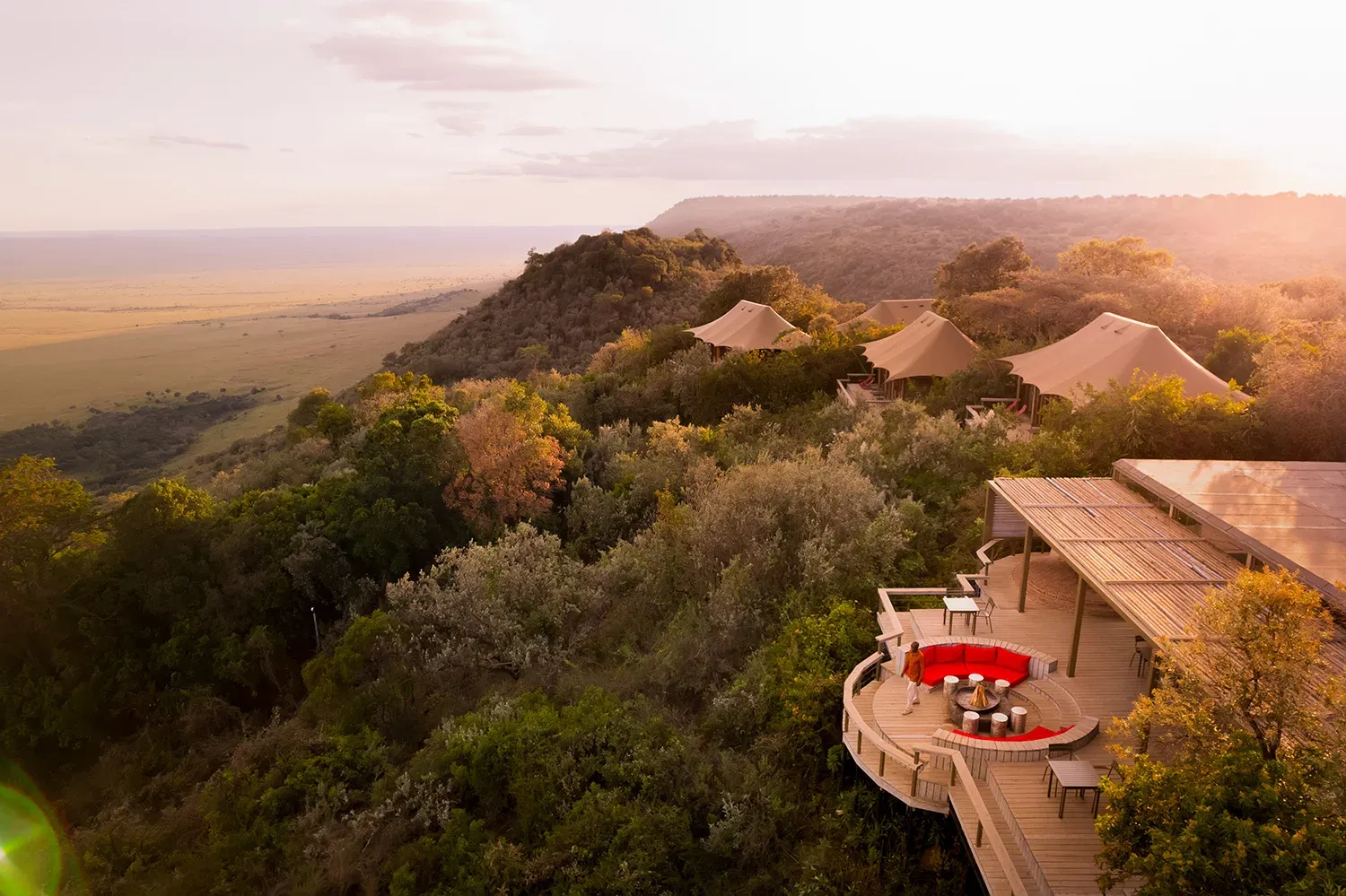
Angama Mara Review — Is This Kenya’s Finest Safari Lodge?
Angama Mara sits on the edge of the Great Rift Valley, 300 metres above the Masai Mara. The view from the main deck — an unbroken sweep of savannah stretching to the horizon, the Mara River threading through it — is one of the most famous in African hospitality. It is the view that launched a thousand Instagram posts and a fair number of marriage proposals. But a view does not make a safari lodge. After two stays and dozens of clients sent there, I can tell you what Angama Mara actually delivers once the view has settled into the background. The Location — Why It Matters Angama Mara is located on the Oloololo Escarpment, on the western boundary of the Masai Mara National Reserve. This is significant for two reasons. First, the escarpment gives the lodge its defining characteristic — that elevated position, suspended between the sky and the plains below. Second, and more importantly for the safari experience, the western Mara is where many of the river crossings during the Great Migration take place. The Mara River runs directly below the lodge. During Migration season (July to October), guests at Angama can be at the river within a 30-minute drive. During the rest of the year, the western Mara offers excellent resident game viewing — lion, leopard, cheetah, elephant and buffalo are all present year-round. The area is less visited than the central Mara Triangle, which means fewer vehicles at sightings. The Tented Suites There are 30 tented suites in two camps of 15, set into the hillside below the main area. Each tent has floor-to-ceiling glass on the valley-facing side — a design choice that would feel wrong anywhere else but here is justified entirely. You wake to the view. You fall asleep to it. The canvas and glass combination creates an experience that is both immersed in the bush and protected from it. The tents are spacious (approximately 100 square metres), well-designed, and feel considerably more refined than most safari accommodation. The bathrooms are generous. The mini-bar is complimentary. The Wi-Fi works, though using it feels slightly like checking your phone during a cathedral service. One detail worth noting: the walk from the main area to the tents is steep. Angama is built on a hillside, and the paths descend significantly. This is not a flat-ground camp. It is not prohibitive — the paths are well-maintained and there are vehicles available — but it is worth knowing if mobility is a consideration. “Angama changed what I thought a safari camp could be. It is not roughing it in luxury. It is genuine refinement, suspended above the Mara.” — Manny, Adventure & Safari Specialist The Guiding Guiding at Angama is excellent. The guides are Maasai and Kenyan, experienced, and genuinely knowledgeable about both the ecology and the local culture. Game drives are in custom-built Land Cruisers with pop-up roofs. The maximum is 6 guests per vehicle, which is standard for luxury Kenya camps. What sets Angama apart on the guiding front is the bush breakfasts and the flexibility. Guides will adjust the drive to what is happening in the reserve on any given morning — if there is a kill nearby, you go. If the river crossing is active, you go. The schedule serves the wildlife, not the other way around. The Photographic Studio Angama has an on-site photographic studio staffed by a professional photographer. This is one of the features that sets it apart from other Mara camps. Guests can borrow professional camera equipment (including long telephoto lenses), get in-field guidance during game drives, and have their images processed and printed at the studio. For keen photographers, this alone is a reason to choose Angama over comparable lodges. Dining Dining at Angama is varied, well-executed and served in constantly changing locations. Breakfast on the deck overlooking the valley. Lunch in the shamba (garden). Dinner under the stars, or in the boma (outdoor enclosure), or occasionally as a bush dinner out in the reserve itself. The food is a blend of Kenyan and international, with a strong emphasis on local ingredients — the shamba grows herbs and vegetables on site. The quality is a clear step above what most safari camps deliver. It is not Soneva Fushi-level fine dining, but it is genuinely excellent and consistently surprising for a property in the middle of the Masai Mara. Who It’s For — and Who It’s Not For Angama is for: Couples. Honeymooners who want safari and romance in one place. Photographers. Repeat visitors to Kenya who want the finest camp in the western Mara. Travellers who value design and atmosphere as much as wildlife. Angama is not for: Families with young children (minimum age is 5, and the steep terrain makes it impractical for toddlers). Travellers who want a flat, easy-access camp. Anyone who prioritises the Mara Conservancies’ off-road driving — Angama is in the National Reserve where vehicles must stay on established tracks. The Verdict Angama Mara is, in my view, the finest property in the Masai Mara for a particular kind of traveller — one who values design, atmosphere and that extraordinary elevated position as much as the wildlife below. For that traveller, there is nowhere better.
 Comparison
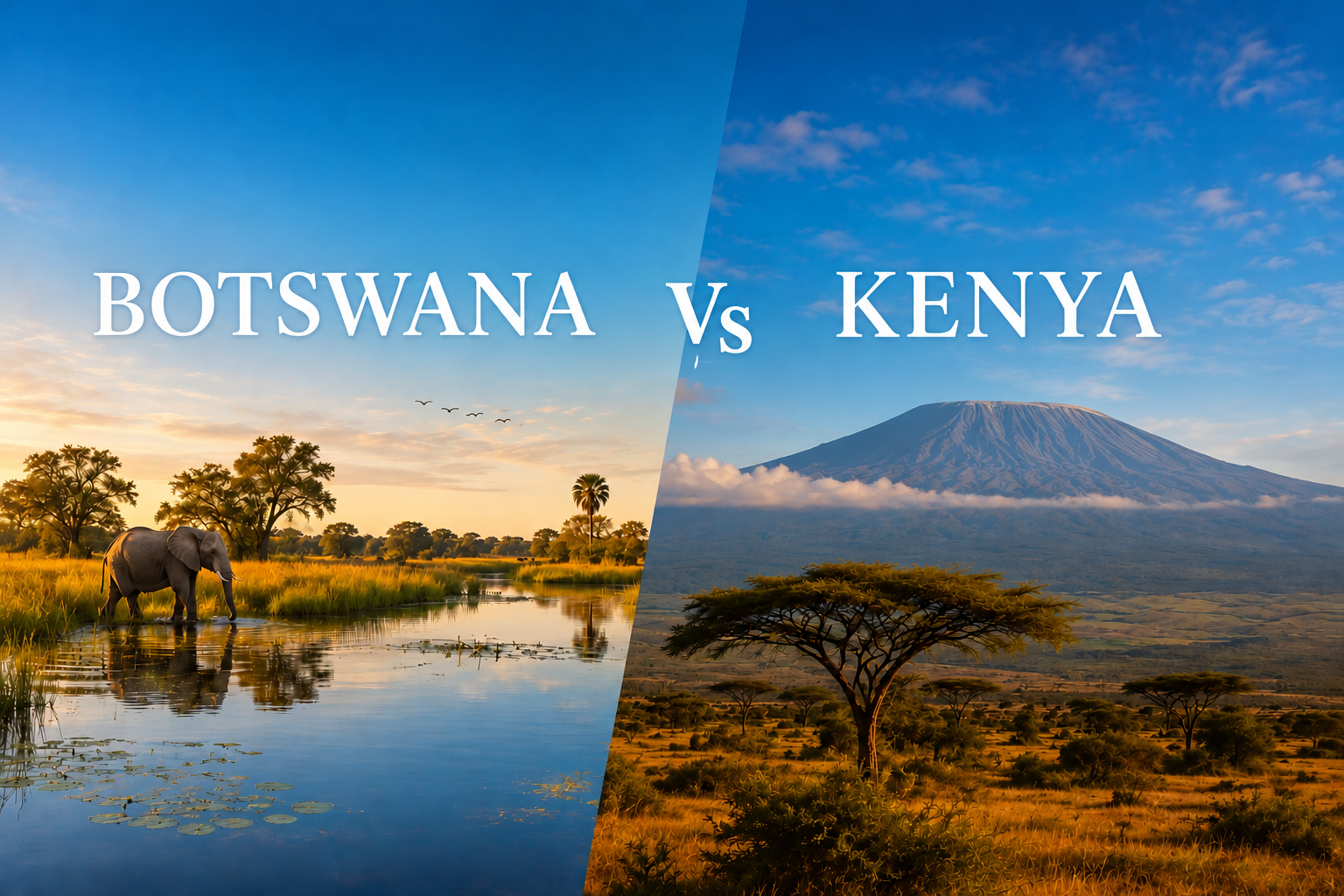
Botswana vs Kenya: Which African Safari Is Right for You?
This is the safari decision that keeps coming up. Both Kenya and Botswana deliver extraordinary wildlife encounters. Both are among the finest safari destinations on earth. But they are fundamentally different experiences — in landscape, in camp style, in wildlife density, in price, and in what they ask of you as a traveller. I have spent months in both countries across fifteen years. Here is my honest, no-agenda comparison. The Feel — What Each Country Is Actually Like Kenya is vast, varied and dramatic. The Masai Mara is rolling savannah stretching to the horizon. Amboseli has Kilimanjaro as a permanent backdrop. Laikipia is semi-arid bush country with a completely different character. Kenya gives you variety within a single trip — you can experience three genuinely different ecosystems in a two-week safari. Botswana is defined by water. The Okavango Delta is a 20,000-square-kilometre inland delta that floods annually, creating a mosaic of channels, islands, lagoons and floodplains. Chobe has the highest concentration of elephants in Africa. The Makgadikgadi Pans are lunar in their emptiness. Botswana is quieter, more exclusive, and more expensive — by design. If Kenya is a symphony — loud, varied, dramatic — Botswana is a string quartet: intimate, refined, and quietly extraordinary. “Kenya gives you the spectacle. Botswana gives you the intimacy. Both change you. They just change you differently.” — Nick, Africa & Safari Specialist Wildlife Kenya: Wildlife density in the Masai Mara is arguably the highest in Africa. You will see the Big Five. You will see them frequently. The Great Migration (July–October) brings 1.5 million wildebeest and the predators that follow them. Kenya is the place for volume, drama and the classic safari photograph — lion on a kopje, cheetah in the golden grass, Mara River crossings. Botswana: Wildlife encounters in Botswana are less frequent but more intimate. A walking safari in the Delta, with a Mokoro canoe glide through lily-covered channels, followed by an elephant herd crossing a floodplain — this is Botswana at its best. Wild dog sightings are more common than in Kenya. Leopard sightings in the Moremi are excellent. The elephants in Chobe are the most dramatic herds I have ever seen — thousands strong, wading across the river. Winner: Kenya for sheer volume and the Migration spectacle. Botswana for intimate, uncrowded encounters and the water-based safari experience. Camp Style & Exclusivity Kenya: Kenya has the full range — from excellent value mid-range camps to the ultra-luxury end (Angama Mara, andBeyond Bateleur, Cottar’s 1920s). The Mara Conservancies (private conservancies bordering the national reserve) offer exclusivity that the reserve itself cannot — off-road driving, night drives, walking safaris, and far fewer vehicles. Botswana: Botswana has deliberately positioned itself as a high-value, low-volume destination. Camp sizes are smaller (typically 8–16 guests). Prices are higher. The result is genuine exclusivity — you will rarely share a sighting with another vehicle. The government limits tourism numbers through high park fees and camp size restrictions. This is intentional, and it works. Winner: Botswana, for guaranteed exclusivity. Kenya matches it in the private conservancies but not in the national reserve, which can be busy during peak Migration season. Getting There Kenya: Direct flights from London to Nairobi take approximately 8.5 hours (British Airways, Kenya Airways). From Nairobi, a domestic flight to the Masai Mara takes 45 minutes. Total travel time from Heathrow to your camp: approximately 12–14 hours. Straightforward. Botswana: There are no direct flights from the UK to Botswana. The most common routes are via Johannesburg (approximately 11 hours to JNB, then 2 hours to Maun or Kasane) or via Nairobi. Internal transfers within Botswana are almost always by light aircraft. Total travel time: 16–20 hours. More complex, more expensive, more time-consuming. Winner: Kenya, significantly. The direct London–Nairobi flight makes Kenya one of the most accessible safari destinations in Africa. Value Kenya: Kenya offers genuine value at every level. A luxury safari in the Mara Conservancies — private camp, full-board, game drives — costs from £400–700 per person per night. At the top end (Angama Mara, Cottar’s), expect £800–1,200. A 7-night luxury safari including flights from the UK starts from approximately £4,500–6,000 per person. Botswana: Botswana is expensive by design. A luxury camp in the Okavango Delta costs £700–1,500 per person per night. At the top end (Mombo, Jao, DumaTau), expect £1,500–2,500. A 7-night safari including international and internal flights starts from approximately £7,000–12,000 per person. The internal light aircraft transfers add £500–1,000 alone. Winner: Kenya, for value at every level. You can have a world-class safari in Kenya for roughly half the cost of a comparable trip in Botswana. Best Time to Visit Kenya: July to October for the Migration. January to March for green season photography and Amboseli. Good year-round in Laikipia. Botswana: May to October for the Delta flood season (the water rises, concentrating wildlife on islands). July to October for peak wildlife viewing. The green season (November to March) is beautiful but many camps are inaccessible. The Verdict — Choose Kenya If / Choose Botswana If Both countries deliver world-class safari. The choice comes down to what kind of experience you want, and a conversation with one of our Africa specialists will settle it in twenty minutes.
From the Maldives Specialist
The Maldives is about which version of yourself you want to be for seven days.Travel specialist
From the Africa Specialist
A safari is the only holiday where you go to be genuinely surprised.James Okafor
From the Founder
Travel can be more personal, more considered, and more genuine.Monis · Founder
Also from Rizka Travel